
These are not interchangeable products. Confusing them can cost you money or leave a construction business underfunded.
This guide focuses mainly on Crane Finance-style personal loans, since that's what most searchers are actually asking about, while also covering the equipment-financing route for contractors. Either way, loan availability, rates, fees, and legal terms shift by lender and by state. Always verify current disclosures before you sign anything.
Key Takeaways
- Crane Finance personal loans and commercial crane-equipment loans serve entirely different purposes.
- Tribal-lender status can change which laws and complaint processes apply to your loan.
- Bad credit rarely blocks approval outright, but it usually raises your cost or shrinks your offer.
- Compare APR, total repayment, fees, and alternatives, not just how fast a lender approves you.
What Are Crane Loans?
"Crane loans" often points searchers to Crane Finance, an online lender for personal installment loans. It advertises amounts in the $100 to $1,500 range for emergency or short-term expenses, with APR terms set in each borrower's agreement rather than one published rate.
That's a world apart from commercial crane-equipment financing, which contractors use to buy or lease an income-generating construction asset that might cost tens of thousands of dollars or more.
A personal installment loan sized for a few hundred dollars is not a reasonable way to fund a real construction crane. If you're evaluating a large equipment purchase, confirm the loan amount, repayment structure, and intended use are actually appropriate before you apply anywhere.
What a Commercial Crane Loan Usually Covers
Commercial equipment financing generally funds the crane itself, new or used, plus related costs that some lenders bundle in:
- Delivery and site mobilization
- Installation or setup
- Inspection or refurbishment
- Operator training
Contractors typically choose between a few structures:
| Financing type | Ownership | Best for |
|---|---|---|
| Secured equipment loan | Borrower owns the asset | Long-term use, building equity |
| Equipment lease | Lender/lessor holds title | Shorter projects, flexibility |
| SBA-backed loan | Borrower owns the asset | Qualifying small businesses needing longer terms |
| Vendor/dealer financing | Varies by program | Bundling equipment and financing in one step |
Before committing, get a formal equipment quote and weigh it against expected project revenue, maintenance, insurance, and operator costs. A crane that looks affordable on paper can still strain cash flow if you haven't budgeted for what it costs to run.
How Crane Finance-Style Loans Work
Most Crane Finance-style lenders follow a familiar online path:
- Submit an application with basic personal and financial details.
- Verify identity and income, often including bank account information.
- Await underwriting review, which may include credit or alternative-data checks.
- Review your offer, including APR, payment schedule, and fees.
- Sign electronically and, if approved, receive funds by deposit.

Crane Finance's published rates page lists specific contingent fees:
- $30 charge for a dishonored payment
- $20 late fee after 10 days
- $5 optional fee for expedited funding
No universal APR, installment count, or minimum credit score is publicly posted. Your actual terms live in your signed agreement.
This is a fixed installment loan, not revolving credit. Instead of focusing on a single payment's size, calculate the total amount you'll repay across the full term. A $500 loan that looks manageable at $85 a week can add up to considerably more once fees and finance charges are included.
Before signing anything, confirm:
- Payment dates and whether withdrawals are automatic
- Grace periods and default consequences
- Prepayment or early-payoff rules
- Refinancing or renewal terms
- Whether payments are reported to credit bureaus
- Whether the loan is secured or unsecured
Understanding Tribal-Lender Status
Crane Finance describes itself as wholly owned by the Menominee Indian Tribe of Wisconsin, operating under a tribal financial-services license. Tribal ownership doesn't automatically mean a lender sits outside every consumer-protection rule.
Federal disclosure requirements under Regulation Z apply to covered consumer credit regardless of tribal affiliation, and state-level oversight can still come into play.
For example, Washington's Department of Financial Institutions has flagged Crane Lending LLC as not licensed to operate in that state, a reminder that availability and legal treatment can vary sharply depending on where you live.
Before applying with any tribal-affiliated lender:
- Review the governing-law clause in the loan agreement
- Check licensing status with your state's financial regulator
- Understand the complaint or dispute-resolution process
- Talk to a consumer-finance or legal professional if anything is unclear
Alternatives to Crane Loans and How to Compare Costs
Short-term personal loans aren't the only option, and they're rarely the cheapest one. Depending on your situation, consider:
- Bank or credit union personal loans – typically lower APRs for qualifying borrowers
- Regulated online installment loans – wider range of terms, still worth comparing carefully
- Employer or nonprofit assistance programs – often overlooked, sometimes interest-free
- Payment plans with the creditor you already owe – can eliminate the need to borrow at all
- Secured borrowing – lower rates, but puts an asset at risk
Be especially cautious with payday loans, title loans, or stacking multiple short-term loans. The Consumer Financial Protection Bureau notes that a typical two-week payday loan charging $15 per $100 borrowed works out to almost 400% APR.

Annualized, that cost shows how expensive short-term borrowing becomes. Renewing or rolling over these loans only compounds the problem.
Use this checklist before accepting any offer:
- APR and total repayment amount
- Payment frequency and loan term
- All fees, including late and expedited-funding charges
- Automatic-debit authorization terms
- Whether payments are reported to credit bureaus
- Cancellation rights and customer-service access
A simple budgeting check helps too: compare the proposed payment against your reliable take-home income and essential expenses. Ask whether you could still make that payment if your income dropped or an unexpected bill hit.
Business Equipment Financing for Contractors
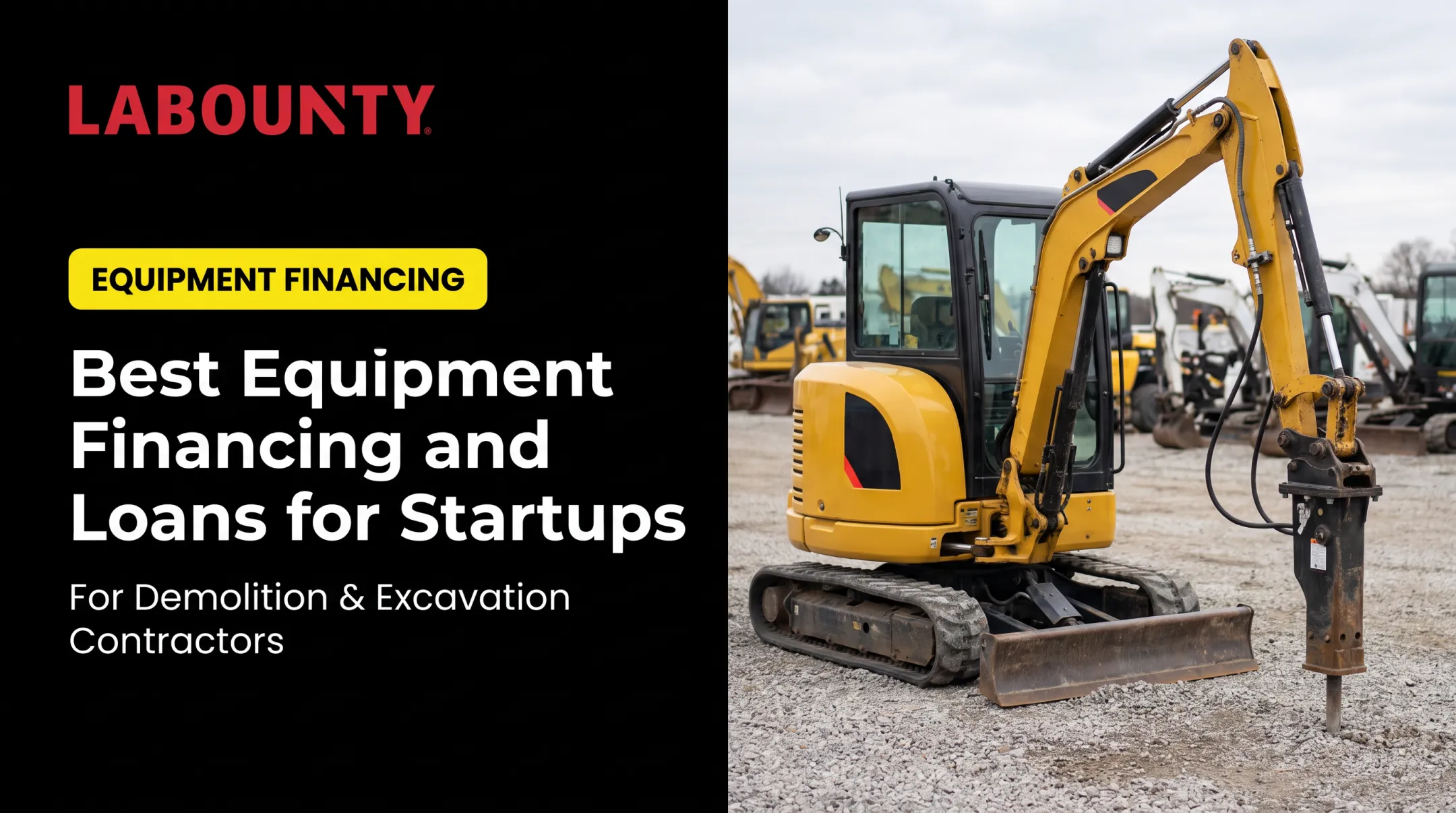
If what you actually need is a crane, hydraulic hammer, or other demolition equipment, a personal loan is the wrong tool. EFI Demolition Equipment does not offer Crane Finance-style personal loans. It helps contractors source and finance the equipment itself.
EFI partners with Currency Finance and American Bank to offer equipment financing on machinery typically ranging from $19,000 to $42,000 and up, with applications that take minutes online. A few things worth knowing upfront:
- Advertised monthly payments assume a secured commercial-use loan for highly qualified applicants; actual terms vary by borrower.
- Consumer financing isn't available to Nevada residents, and other state restrictions may apply.
- California financing is provided or arranged by Express Tech-Financing, LLC dba Currency (California Finance Lender License #60DBO54873, NMLS ID 1857954).
- Vermont residents receive a loan solicitation only; Currency Finance is not the lender there, and information may be shared with third parties as part of the inquiry.
Beyond financing, EFI also supports the equipment side of the purchase:
- Sources from 30+ brands across a 2,500+ unit inventory
- Custom-fabricates mounts and pins to fit your carrier machine
- Runs every unit through a 12-point inspection before it ships
None of this guarantees financing approval or crane availability for a specific job. Confirm current eligibility, rates, and equipment specifics directly with EFI or a qualified commercial lender.
Who May Qualify and How to Prepare
Commercial lenders reviewing crane and demolition-equipment financing typically weigh a short set of business factors:
- Business revenue stability and time in operation
- Bank statements and identity or entity verification
- Credit history, existing debt, and current equipment obligations
- Down payment, equipment age/hours, and state lending rules
There is no single minimum credit score across every equipment lender. Applicants with less-than-perfect credit may still be reviewed, but approval is never guaranteed. Weaker credit more often means a higher rate, a smaller approval amount, a larger down payment, or tighter income verification—not an automatic no.

Before you apply, take these steps:
- Read the lender’s current disclosures in full, not only the marketing summary.
- Gather business tax returns, bank statements, and equipment quotes the lender is likely to request.
- Model a payment you can carry under normal and slower-job-month cash flow.
- Compare at least one alternative—dealer-arranged financing, a bank or equipment line, or rent-to-own versus purchase.
- Never submit sensitive financial information through an unverified website.
EFI Demolition Equipment works with partner lenders on equipment purchases so contractors can align terms with job schedules and cash flow before they commit.
Choosing a Safer Next Step
Before you accept any crane or equipment loan offer, slow down long enough to verify the basics:
- Confirm the lender's legal identity, contact information, and licensing disclosures
- Check for a stated tribal-ownership or governing-law clause
- Look for a genuinely secure application process (not just a padlock icon)
- Read the entire loan agreement, not just the summary terms
Save copies of the offer, payment schedule, and every written disclosure or message. If a company demands an upfront fee just to "guarantee" approval, treat it as a red flag and walk away.
The cheapest option that actually covers your need beats the fastest one almost every time. Borrow only what you can repay comfortably. When the terms are unclear, get a second opinion from a qualified financial or legal professional before you sign.
Frequently Asked Questions
Are Crane loans offered as tribal loans?
Crane Finance describes itself as owned by a federally recognized tribe. Before applying, verify the current lender identity, governing-law language, and state licensing status, since regulatory treatment varies by location.
How long does approval take for Crane loans?
Timing depends on application completeness, verification, and the lender's processing schedule. Some lenders offer next-business-day funding for a fee, but do not expect instant approval.
Can I get a Crane loan with bad credit?
Some lenders consider applicants with poor or limited credit, but approval, cost, and loan size still depend on income, repayment ability, and underwriting. Bad credit usually raises the cost; it does not mean automatic denial.
What should I compare before accepting a Crane loan?
Compare APR, total repayment amount, fees, payment dates, automatic-withdrawal terms, credit reporting, and prepayment rules. Check at least one lower-cost alternative before you sign.
Are Crane loans for buying a construction crane?
No. These are small personal installment loans, not equipment financing. Contractors buying a crane should look into equipment loans, leases, rentals, or vendor financing instead.