
The Teleskid adds a telescopic boom to a skid-steer-sized frame. Bobcat's lineup sticks with conventional lift paths across a wide range of wheeled and tracked models. For U.S. contractors, that difference affects reach, attachment flexibility, transport logistics, and total ownership cost.
This guide compares the Teleskid against specific Bobcat models rather than treating either brand as the automatic winner. You'll get verified specs, real use cases, and a decision framework you can apply to your own project before you buy or rent.
Key Takeaways
- The JCB Teleskid adds telescopic reach and elevated placement to a skid-steer-sized machine.
- Bobcat loaders emphasize conventional loader productivity, maneuverability, and a broad attachment ecosystem.
- Opt for the Teleskid when reach or below-grade digging cuts repositioning time.
- Favor Bobcat when simplicity, traction, or attachment sharing matter more than boom extension.
- Always compare exact models' rated capacity, weight, and hydraulic flow before deciding.
JCB Teleskid vs Bobcat Loaders: Quick Comparison
Operating Concepts
The JCB Teleskid is a skid steer or compact track loader with a single telescopic boom, called the Powerboom. That boom extends and retracts, changing forward reach and lift height on demand, something a fixed-arm loader can't do.
Bobcat doesn't build a direct telescoping equivalent. It offers conventional skid steers and compact track loaders in radial-lift and vertical-lift configurations, so any comparison needs a specific Bobcat model, not the brand as a whole.
Reach and Lift Height
JCB's 2025 specification sheet for the 3TS-8W (wheeled) and 3TS-8T (tracked) lists forward reach of 3 ft 6 in retracted and 7 ft 4 in extended. Maximum hinge-pin height is 13 ft 3 in (159 in) for both models, according to JCB's Teleskid Range eSpec.
Bobcat's current Pro S64-2 hits a 10 ft 0 in (120 in) hinge-pin height, per its 2026 full-line specification sheet. Extra reach helps most when:
- Loading high-sided trucks without repositioning
- Placing material over an obstruction, like a wall or stockpile
- Setting materials at elevation on tight sites
Digging, Breakout, and Ground-Level Work
Reach and digging performance aren't the same thing. The Bobcat 2026 full-line specification sheet lists 5,481 ft-lb bucket breakout and 4,597 ft-lb lift-arm breakout for the S64-2.
JCB describes below-grade digging capability on its 3TS-8T product page, but that page carries no publication date. Treat it as a manufacturer statement, not a verified match against Bobcat's dated breakout figures.
Capacity, Size, and Transport
| Model | Operating weight | Width | Rated capacity (retracted/extended or standard) |
|---|---|---|---|
| JCB 3TS-8W | 9,859 lb | 6 ft 0 in (72 in) | 3,208 / 1,347 lb |
| JCB 3TS-8T | 12,615 lb | 6 ft 5 in (77 in) | 3,695 / 1,614 lb |
| Bobcat S64-2 | 6,855 lb | 5 ft 4.6 in (64.6 in) | 2,300 lb |
| Bobcat T76-2 | 9,592 lb* | 6 ft 1.5 in (73.5 in)* | 2,900 lb |

*From Bobcat's current, undated model page.
Heavier machines disturb soft ground more and need bigger trailers. Confirm gate clearances and trailer capacity before committing.
Attachment and Ownership Considerations
Both JCB Teleskid models run 24 gpm standard, 33 gpm high-flow hydraulics. Bobcat's S64-2 offers 17.6/26.9 gpm, and the T76-2 offers 23.3/30.3 gpm. Match the attachment's hydraulic demand, not just its bucket width, to the machine's flow rating and load chart before buying.
What Is a JCB Teleskid?
JCB markets the Teleskid as a telescopic skid steer, combining loader functions with reach characteristics closer to a telehandler. The Powerboom extends forward and lifts, letting one machine cover jobs that would normally take two.
Both current U.S. models, the wheeled 3TS-8W and tracked 3TS-8T, share the same 74-horsepower engine and boom geometry. The tracked version weighs roughly 2,750 pounds more, largely because of its undercarriage.
Why the reach matters on site:
- Reaching into truck beds without driving the loader up a ramp
- Placing loads beyond a wall, trench, or stockpile without repositioning
- Digging below the machine's own standing grade
JCB also builds the Teleskid with a wide, side-entry door, letting operators skip climbing over the attachment to get in the cab. JCB says this improves visibility and safety, though available trade coverage doesn't include independent tests of that claim.
The trade-off: the boom mechanism adds complexity and cost. Rated capacity drops sharply as the boom extends, from 3,208 pounds down to 1,347 pounds on the 3TS-8W. Operators need to plan loads around that curve, not the machine's maximum retracted rating.

Use Cases of a JCB Teleskid
The Teleskid earns its keep on jobs with awkward access or repeated reach needs:
- Utility and site work in narrow corridors where a second machine can't fit
- Demolition support, placing debris into dumpsters or trucks from a distance
- Landscaping and material placement over retaining walls or planted beds
- Agriculture, loading feed or materials at height into bins or trucks
Stone & Sons put a 3TS-8T to work on a multiyear interstate lighting project in downtown Birmingham, Alabama, running it through narrow corridors between precast concrete highway sections.
According to Construction Equipment Guide, the contractor said the machine "fit the bill perfectly" for the tight-access, long-reach requirements of that job.
The Teleskid doesn't replace a dedicated telehandler or excavator for every job. It fills the gap between them when reach and access are the bottleneck.
What Are Bobcat Loaders?
Bobcat splits its lineup into wheeled skid steers, built for hard surfaces and tight maneuvering, and compact track loaders, built for traction on soft or uneven ground.
Two current models sit closest to a Teleskid comparison:
- Pro S64-2 (wheeled): 68 hp, about 6,855 lb
- Pro T76-2 (tracked): 74 hp, about 9,592 lb
Radial lift vs. vertical lift, explained simply:
- Radial lift moves the bucket in an arc. It's better for digging and mid-height reach, like backfilling or dumping over a low wall.
- Vertical lift raises the bucket straight up. It's better for stacking pallets or loading into high-sided trucks.
Bobcat's own buying guide frames the choice as working at or below eye level (radial) versus above eye level (vertical). Check the lift path on the exact model you are quoting before you treat either path as a given.
Where Bobcat loaders lead:
- Familiar conventional controls and layout
- A large, mature attachment ecosystem
- Strong maneuverability on firm or paved surfaces (wheeled models)
- Better flotation and reduced ground pressure on soft terrain (tracked models)
Where they fall short of a Teleskid: without a telescoping boom, reaching into a high truck bed or placing material beyond an obstacle often means repositioning the machine or bringing in a second unit.
Use Cases of Bobcat Loaders
That same wheeled-versus-tracked split drives most jobsite fit decisions:
- Wheeled skid steers fit paved lots, indoor work, and jobs with frequent travel across firm ground.
- Compact track loaders fit slopes, wet sites, landscaping, and grading where flotation matters more than top speed.
- High-sided loading still has limits: without a telescoping boom, reaching into tall trailers or truck beds often means extra repositioning or a second machine.
JCB Teleskid vs Bobcat: What Is Better for Your Job?
Match the machine to your work cycle, not the spec sheet's biggest number.
Choose a JCB Teleskid when:
- The job regularly needs extended forward reach or elevated placement
- You dig below grade often enough to justify the boom
- Side-entry access and one-machine versatility outweigh added cost
Choose a Bobcat skid steer when:
- You need conventional loader performance on firm, paved ground
- Attachment access and operator familiarity matter more than reach
- Compact maneuverability is a daily requirement
Choose a Bobcat compact track loader when:
- Traction, flotation, and lower ground pressure matter on soft or sloped terrain
- Grading control is a bigger priority than telescopic reach
- Grading control is a bigger priority than telescopic reach
- Soft soil, mud, or snow would limit a wheeled skid steer
A Short Job-Scenario Guide
- Truck loading or elevated placement: Ask if the Teleskid's reach eliminates a second machine on site.
- Grading, backfilling, or snow removal: A conventional Bobcat loader is usually the simpler, more economical setup.
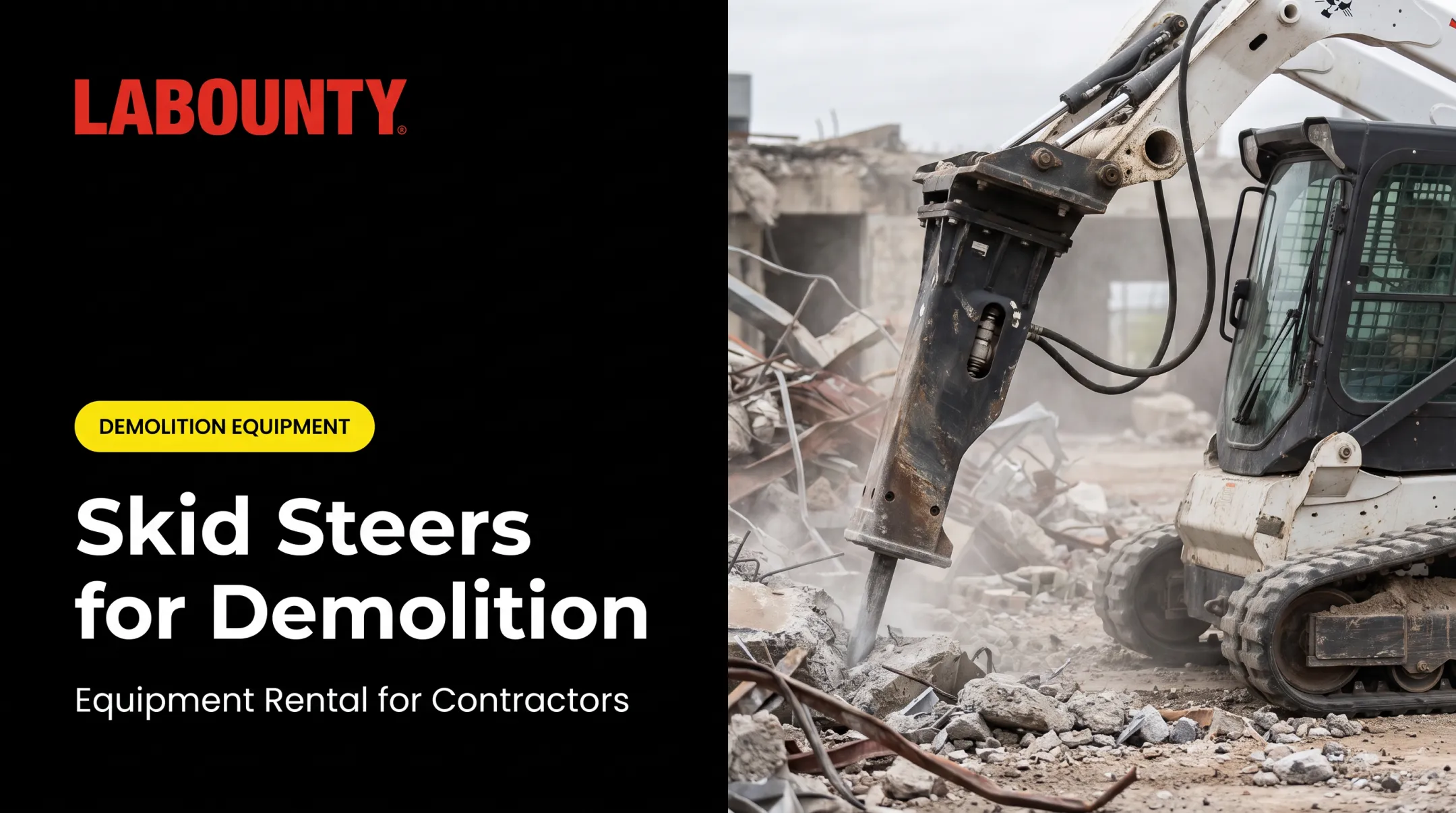
- Demolition and concrete work: Match the loader to the attachment's hydraulic demand, impact loads, and visibility. Don't select purely by lift capacity.
- Mixed fleet or rental operation: Prioritize parts availability, operator familiarity, and local service support.
Total cost of ownership matters as much as the sticker price. Factor in transport weight, tire or track wear, and hydraulic tooling costs. Confirm service access before you lock in a decision. Neither manufacturer publishes current, apples-to-apples U.S. list pricing, so get a quote for your exact configuration rather than relying on a listed starting price.
Real-World Examples and Buying Guidance
Both manufacturer-published examples above show real jobs solved by real machines, but neither is a controlled head-to-head test. Use them to understand fit, not to predict your own results.
Before you buy or rent, run through this checklist:
- Inspect the machine and verify hours and service history
- Test the boom or lift path under load
- Confirm coupler and hydraulic compatibility with your attachments
- Review the manufacturer's load chart at your intended working reach
- Inspect tires or tracks for wear
- Confirm transport weight against your trailer and towing capacity
Coupler compatibility deserves extra attention. JCB describes an SAE/ISO-style quick hitch on the Teleskid; Bobcat uses Power Bob-Tach on its current models. ISO 24410:2020 governs coupler dimensions, but it doesn't guarantee every attachment's hydraulics or electrical connections will match across brands. Verify fitment or budget for a custom adapter.

If coupler or attachment fit is the sticking point, EFI Demolition Equipment can help close the gap. It sources from more than 2,500 units across 30-plus brands, matches attachments to your carrier, and fabricates custom mounts and pins in-house—often within a day.
Weighing a Teleskid against a Bobcat for demolition or site prep? EFI can confirm availability, arrange rental or financing through partners like Currency Finance and American Bank, and coordinate delivery from its DeRuyter, New York yard.
Conclusion
There's no universal winner. The JCB Teleskid is a specialist choice for reach, elevated placement, and multi-role capability on tight sites. Bobcat skid steers and compact track loaders cover a broader range of conventional loader work, with a deeper attachment pool and simpler day-to-day operation.
Match the machine to your job by checking:
- Exact model capacity and lift specs
- Attachment availability for your tasks
- Terrain and ground conditions
- Transport and site access limits
Reach out to EFI Demolition Equipment for equipment availability, attachment fitment, rentals, or delivery configured to your job.
Frequently Asked Questions
How much does a JCB Teleskid cost?
Price varies by model, age, hours, attachments, and condition. Get a current quote from your dealer or supplier instead of relying on a listed starting price.
Is a telehandler better than a skid steer?
For dedicated high-reach lifting and pallet placement, a telehandler is usually the better tool. Skid steers tend to come out ahead on compact maneuverability, digging, and attachment versatility. The Teleskid sits between the two.
Are JCB Teleskids any good?
They offer real reach, visibility, and side-entry benefits, but at higher cost and complexity than a conventional loader. Whether that trade-off pays off depends on how often you actually use the boom.
Is a JCB Teleskid better than a Bobcat loader?
Choose the Teleskid when telescopic reach is central to the job. Choose a Bobcat loader when you need conventional loader productivity, traction, and simpler attachment swaps. Line the decision up against your real daily workflow, not brochure specs alone.
Can Bobcat attachments be used on a JCB Teleskid?
Compatibility hinges on the coupler, attachment size, hydraulic flow, and rated capacity. Confirm fitment before you buy or rent; an adapter or custom mount can bridge mismatches when the hydraulics and capacity still check out.
Which is better for demolition and site prep: a JCB Teleskid or a Bobcat loader?
Base the call on attachment hydraulic demand, visibility, and ground conditions. If you load material at height, Teleskid reach helps; for most ground-level demo and site prep, a Bobcat loader usually stays simpler.